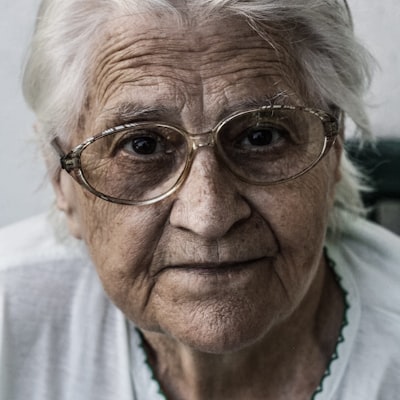

Sometimes I can’t help but try to convince them, which obviously doesn’t work. For the record, they don’t support the war in general, they do want it to stop; however, they can justify it in their heads somehow. I deleted some of my messages because the police check social media chats on public transportation. In addition, the police recently searched the flat of a close friend of mine and then put her under house arrest for two months. She had been putting up posters that said “No to war” around the city.
- Around 80% of the male population complete some form of military service.
- He said for many people in this group, opinions changed in June 2022 when many realized the conflict was becoming protracted and not the fast military operation initially promised.
- He says officials are instead monitoring the situation to make sure that it's "under control."
- Because of everything escalating so rapidly, I’m anxious about whether I’ll have issues renewing it due to me being Russian.
Around 80% of the male population complete some form of military service. Refusal can mean a jail sentence, though there is the option of civilian service out of uniform too. Conscription requires young men and women to serve for a limited time in uniform.
Ukraine slaps down Slovakia PM for telling it to give up territory
It also signals an inherent mistrust of state institutions that will be part of Russian society — especially outside of Moscow — well after Putin’s reign ends, whenever that may be. The analysis suggests that Russians, especially outside of Moscow, are not buying the propaganda as they once were. The Kremlin has also been unable to use its propaganda to sustainably mobilize popular sentiment around an affirmative agenda, in this case its war in Ukraine.
- Most ordinary Russians are in the middle, trying to make sense of a situation they didn't choose, don't understand and feel powerless to change.
- Now a senior fellow at Johns Hopkins University, Pomerantsev shuttles between Washington, D.C., and Ukraine.
- Mostly because I don’t understand how anyone could take this step – to send people to fight, to kill others.
- Germany's Defence Minister, Boris Pistorius, recently told a German newspaper "we have to take into account that Vladimir Putin might even attack a Nato country one day".
Surveys have suggested that the majority of Russians support the invasion. But it is difficult to determine how reliable these surveys are, in light of new crackdowns on free speech and dissent in Russia, where even the use of the word “war” to describe the invasion is now a crime. In the meantime, sanctions affect every Russian citizen in their daily lives – both those who support and those who oppose the war, those at home and those abroad. The results from organisations such as Russian Field and Chronicles do not tally with binary stereotypes of all Russians as either fascist automatons or repressed westernisers dreaming of a Eurocentric future.
Two thirds of Russians think of themselves and Ukrainians as ‘one people’ – yet not even a third of Ukrainians agree
Opposition leader Alexei Navalny, who has been serving prison time since 2021 after leading street protests and starting a nationwide opposition movement, was recently moved to a penal colony in Russia's far north. However, Mr Orban's political director said this morning that Hungary was open to using the EU budget to allow further aid for Ukraine. Prime Minister Viktor Orban has been highly critical of the EU's financial and military aid for Ukraine and has maintained close ties with Russia. Mr Zelenskyy has called for public officials to disclose their incomes to increase transparency and eliminate corruption as Ukraine tries to meet the stringent requirements for its bid to join the European Union. Only aircraft deployed to protect energy facilities, or those carrying top Russian or foreign officials, will be allowed to fly with special permission in the designated zones, according to the Vedomosti daily newspaper.

Russia's invasion of Ukraine has focussed the West's military minds. “ https://euronewstop.co.uk/what-is-australia-saying-about-ukraine.html has, again, as with all of those other things, led the way with a £2.5billion package and a security agreement, a cooperation agreement with president Zelensky and Ukraine. The Russian foreign secretary flew on an unspecified “northern route to bypass unfriendly countries” in 12 hours and 45 minutes, Russian state news agency Tass reported. Ukrainian drones attacked a St Petersburg oil terminal on Friday and another 110 miles west at Ust-Luga on Sunday. The Institute for the Study of War (ISW) think tank said fears of “hypothetical Nato attacks” meant the Leningrad Oblast was not well-placed to defend attacks by Ukrainian drones coming from the south.
Putin’s public approval is soaring during the Russia-Ukraine crisis, but it’s unlikely to last
Tobias Ellwood, a former defence minister who has served alongside Sir Patrick, said the military chief should be "listened to carefully". It comes after Defence Secretary Grant Shapps said in a speech last week that we are "moving from a post-war to pre-war world" and the UK must ensure its "entire defence ecosystem is ready" to defend its homeland. A source familiar with the situation said the drone fell at about 7am local time but had not affected fuel output. A little earlier, we told you about a report in the Financial Times that the EU was proposing to sabotage Hungary's economy if Budapest blocks further aid for Ukraine this week. Moscow has claimed its forces have taken control of the village of Tabaivka in Ukraine's northeastern Kharkiv region. Mr Szijarto will be in the western Ukrainian city of Uzhhorod with his Ukrainian counterpart Dmytro Kuleba and presidential chief of staff Andriy Yermak.
- Last week, another senior Nato military chief said countries needed to be on alert "and expect the unexpected".
- Donald Tusk has called the war between Ukraine and Russia a battle between “good and evil”.
- Restrictions on reporting are increasingly severe, and access to almost all independent outlets is blocked or limited - or they censor themselves.
- It began in February when we saw huge protests in the capital Kiev, against the pro-Russian President, Viktor Yanukovych, who eventually fled to Russia, but not before his security forces had killed many protesters.
- It could be their Soviet past, or the government propaganda that has been poured out for so many years, or just that there is too much fear and anxiety to actually allow the thought that the world is different from what they expect.
One woman is not certain what to make of the news, although she is generally against the war. "It's politicians trying to sort things out between themselves and ordinary people who are suffering. It won't do any good for my family." And the chaos itself can backfire — or at least quickly diminish its effectiveness — when out of step with lived experience, further undermining legitimacy in the state. Considering all this, telling Russian men and their families that it is in their interest to fight, and die, in faraway Ukraine is a harder story to sell. The state propaganda apparatus — which has expanded from print media and TV into online platforms — has been crucial in crystallizing this acquiescence, especially since Putin came to power in the early 2000s.
Actually, separatist authorities in Luhansk and Donetsk had announced their own plans to evacuate residents from the two breakaway regions to Russia. The United States has said that false warning about Ukraine attacking the separatist regions could help Putin publicly justify the invasion that launched Feb. 24. Public sentiment in Russia over war casualties has been turning more negative during the intense fighting in recent months in eastern Ukraine, according to a new analysis. Koneva said public opinion in Russia increasingly seems resigned to a longer-term war. Sixteen months after Russia's full-scale invasion of Ukraine, the majority of respondents still support the war, and only 20% say they are against.
- But three older people - two middle aged men and an elderly woman - are much more supportive of the invasion.
- The poll was completed before Putin’s announcement that Russia would send what he called “peacekeepers” into the regions.
- In other words, Russians appear to be less and less influenced by propaganda from Moscow, especially when it clearly contradicts the struggles in their daily lives.
- “Ukraine has achieved this because it has largely prevented the Russian Black Sea Fleet from operating in the western Black Sea, where it is held at risk by Ukrainian missiles and uncrewed surface vessels,” it said.
Russians are more likely than Ukrainians to support changing the borders of the two countries so that regions in Ukraine where people may “feel” more Russian could formally become part of Russia. Eastern Ukraine has a higher share of people (45%) who see themselves as ‘one people’ with Russians compared to western Ukraine, but even there, it is not a majority view like in Russia (64%). A larger country claiming a smaller country is called imperialism,” he told CNN by email. “Inside Russia the West is presented as a villain that is abusing Ukraine to undermine Russia’s greatness. In the event of Russian military aggression, Russia will be portrayed as fighting the US and NATO forces, and not killing its Slavic brothers,” Lutsevych said. The survey, of more than 1,000 people in each country, was carried out online from February 7 to 15, before Putin’s speech Monday and Moscow’s recognition of two breakaway separatist republics in Ukraine.
- Koneva said public opinion in Russia increasingly seems resigned to a longer-term war.
- Sixteen months after Russia's full-scale invasion of Ukraine, the majority of respondents still support the war, and only 20% say they are against.
- The margin of sampling error is plus or minus 3.1 percentage points for Russia and plus or minus 3 points for Ukraine for nation-wide data.
- There’s a generational divide on the question in Ukraine, where 41% of people aged 55 and over – old enough to remember the Soviet Union – see it as having been a positive thing.
- Russian military enlistment offices have been attacked 220 times since the war in Ukraine began, Moscow’s interior ministry has said.
“The feeling of the inevitability of war from the life of Russians, the feeling that the war is now with us, and we are with this life, caused the emergence of new meanings of war,” Zhuravlev said. “For example, a person says, 'I support,' but then researchers will follow up with questions to determine if they are ready to go to war, ready to donate to the Russian army or expect benefits from a possible victory," Koneva explained. In a written response to questions, she said that despite the self-censorship, pollsters "can usually have higher confidence in the reliability of poll findings that show some fluctuation over time." Vladimir Putin’s Russia has sharply constricted the space for free expression in recent years, but some independent pollsters who fled the country have not abandoned their work. One-quarter of respondents say they already feel the effect of those sanctions, according to Volkov.

This is particularly true in the regions of Russia most heavily targeted by Putin’s mobilization. Some of the first data FilterLabs gathered after the invasion was from the republic of Buryatia, a mostly rural, underdeveloped region 3,700 miles from Moscow and bordering Mongolia. Many of those drafted into the Russian army regardless of age, military experience and medical history come from ethnic minority dominant regions like Buryatia. In April, a national propaganda campaign created a positive spike in local sentiment in Buryatia towards the war that lasted for 12 days before reverting to pre-campaign levels. Sentiment analysis is a well-tested form of artificial intelligence that trains computers to read and understand human-generated text and speech.