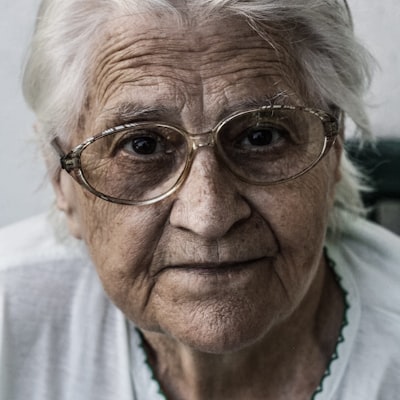

You could argue Sonya is typical of the pro-European young professional class emerging in eastern Ukraine. Sonya goes on to say she hopes the pro-Russian separatists nearby would not get what they wanted, and that they would soon tire of the fight and, as she put it "go back home." So there's really no surprise that when trying to escape the economic hardships in Ukraine in the 90's and ever since, many western Ukrainians went to Europe to find jobs.
In Belgorod, close to the Ukrainian border and just 80km (50 miles) from the now war-torn city of Kharkiv, local people are now used to convoys of military trucks roaring towards the front line. Cuts have already seen the size of the British Army fall from more than 100,000 in 2010 to around 73,000 now. https://euronewstop.co.uk/what-happens-if-ukraine-falls.html said that within the next three years the British Army needed to be 120,000 strong with the addition of reserves. But he said even that is not enough - so the Army should be designed to expand rapidly "to enable the first echelon, resource the second echelon, and train and equip the citizen army that must follow". The overall effect means Finland can muster one of Europe's largest armies. The size of its active armed forces is only 19,000 personnel, but it can call on another 238,000 reserves.
Politics latest news: SNP's aim to 'destroy UK' drove their Covid response, says Gove
“They are also of the opinion that, while Ukraine could not stand up to an all-out Russian invasion, Russia would lose much more from that than any military victory would win,” he said. “The reason why 75% of Russians think Russia will not invade Ukraine is simply because of what they read in their newspapers and see on their TV. There is basically no hysteria, no beating of the war drum, a consistent message that we do not want a war and will not start one,” Pozner said. Across the country and across all ages, a majority of Ukrainians say they are not “one people” with Russians and that the two countries should not be one.
- “I’m scared and hurt for my friends in Ukraine, who write to me ‘we’re going down into the bomb shelter’.
- Earlier this month, its civil defence minister told a defence conference "there could be a war in Sweden".
- Overall, he’s always had nationalist views, so it’s not surprising.
- The roots of Russia's invasion of Ukraine go back decades and run deep.
- Far from crippling the entire national infrastructure, the worst they are known to have done is briefly disrupt power and mobile phone networks.
MOSCOW — Waiting for her friends on Moscow’s primly landscaped Boulevard Ring earlier this week, Svetlana Kozakova admitted that she’d had a sleepless night. She kept checking the news on her phone after President Vladimir V. Putin’s aggrieved speech to the nation on Monday that all but threatened Ukraine with war. ” — showed that there is little enthusiasm for a “real,” large-scale war among members of Russia’s modern, urban society (the country’s military operations in Syria and eastern Ukraine in recent years were not seen as real wars).
About Sky News
Most Russians also do not expect a Ukrainian attack on their country -- only 31% of Russians said that was likely. In fact, two out of three (65%) expect a peaceful end to the tensions between Russia and Ukraine. Many in Russia believe their country would be fundamentally threatened by further expansion of NATO to Ukraine, according to veteran Russian and Soviet-era TV host and journalist Vladimir Pozner. One out of every two Russians (50%) says it would be right, while only a quarter (25%) say it would be wrong. The other quarter (25%) are unsure, according to the survey.
- Ukrainians overwhelmingly feel Russia and Ukraine should be two separate countries, with 85% saying so, 9% saying they should be one country, and 6% responding that they did not know.
- Despite the wide gulf in their views of each other, Russians and Ukrainians do see eye to eye on some topics.
- He contrasts this to public opinion surrounding the annexation of Crimea in 2014, recalling that there were positive feelings and even "euphoria" at the time.
- That the Kremlin was right to block the majority of independent media sites they used to read.
- The prospects for an end of the war in Ukraine remain bleak.
My feelings are mixed regarding the decision of our president. I got a government email saying that we had until March 14 to download all files from Instagram. We have VK (a Russian substitute for Facebook), but it’s not the same. It was rather cheap, but now I want to buy AirPods and they’re really expensive. They were 7,000 roubles and now cost more than 14,000 roubles. Their town has been directly affected, so we are worried about them.
And if I am not imprisoned soon for speaking out against war, I want to try – together with like-minded people – to do everything I can to give our country hope for a peaceful future. It’s 9 pm in Moscow and the police have already broken up the bulk of the protests. Since anyone with anti-war signs is arrested immediately, protesters casually stroll along until a large enough crowd gathers to shout their opposition to what's going on in Ukraine.
- Russian President Vladimir Putin used the national Russian holiday commemorating Nazi Germany’s defeat at the end of World War II to demonize the West, suggesting it is responsible for Russia’s war in Ukraine.
- True Russian cyberwarfare capabilities have proved something of a damp squib in Ukraine.
- “The reason why 75% of Russians think Russia will not invade Ukraine is simply because of what they read in their newspapers and see on their TV.
- Volkov adds that public opinion matters, even though the Russian government isn't taking the public's pulse in order to plan its next moves.